






VAT on Aesthetic & Cosmetic Treatments in the UK, Explained
Are Botox and fillers VAT-exempt? Usually not. How HMRC's medical-vs-cosmetic test works, when exemption applies, and why documentation is everything.
Short answer: Most cosmetic aesthetic treatments — anti-wrinkle injections, dermal fillers, chemical peels for appearance — are standard-rated for VAT (20%). They’re only exempt when the treatment’s principal purpose is medical (to protect, maintain or restore health) and it’s provided by a registered health professional. Being delivered by a medical professional isn’t enough on its own — HMRC looks at the primary purpose, and you must be able to document it.
The core test: purpose, not provider
For VAT exemption to apply, HMRC requires two things:
- The service is within the profession you’re registered to practise, and
- The primary purpose is the protection, maintenance or restoration of health.
The key point clinics get wrong: it’s not enough that a doctor or nurse performed it. A tribunal (the “BoTax” case) confirmed that identifying the principal purpose is the correct legal test. Lip filler for augmentation? Almost always cosmetic — standard-rated. Botox for chronic migraine or another recognised medical condition? Potentially exempt — if documented.
Cosmetic = standard-rated (the default)
HMRC generally treats anti-wrinkle injections, dermal fillers and appearance-focused skin treatments as taxable at 20%. If a treatment benefits wellbeing but can’t be shown to have a specific medical purpose, it’s taxable. VAT should be included in the treatment fee.
When can a treatment be exempt?
When the principal purpose is medical and it’s delivered by a registered professional — for example, Botox used to treat a diagnosed condition. But:
- You must maintain thorough documentation — a diagnosis or clinical rationale, not just a note that a clinician did it.
- Even then, you may face an HMRC enquiry, so the paper trail matters.
Why this is a bookkeeping problem, not just a tax one
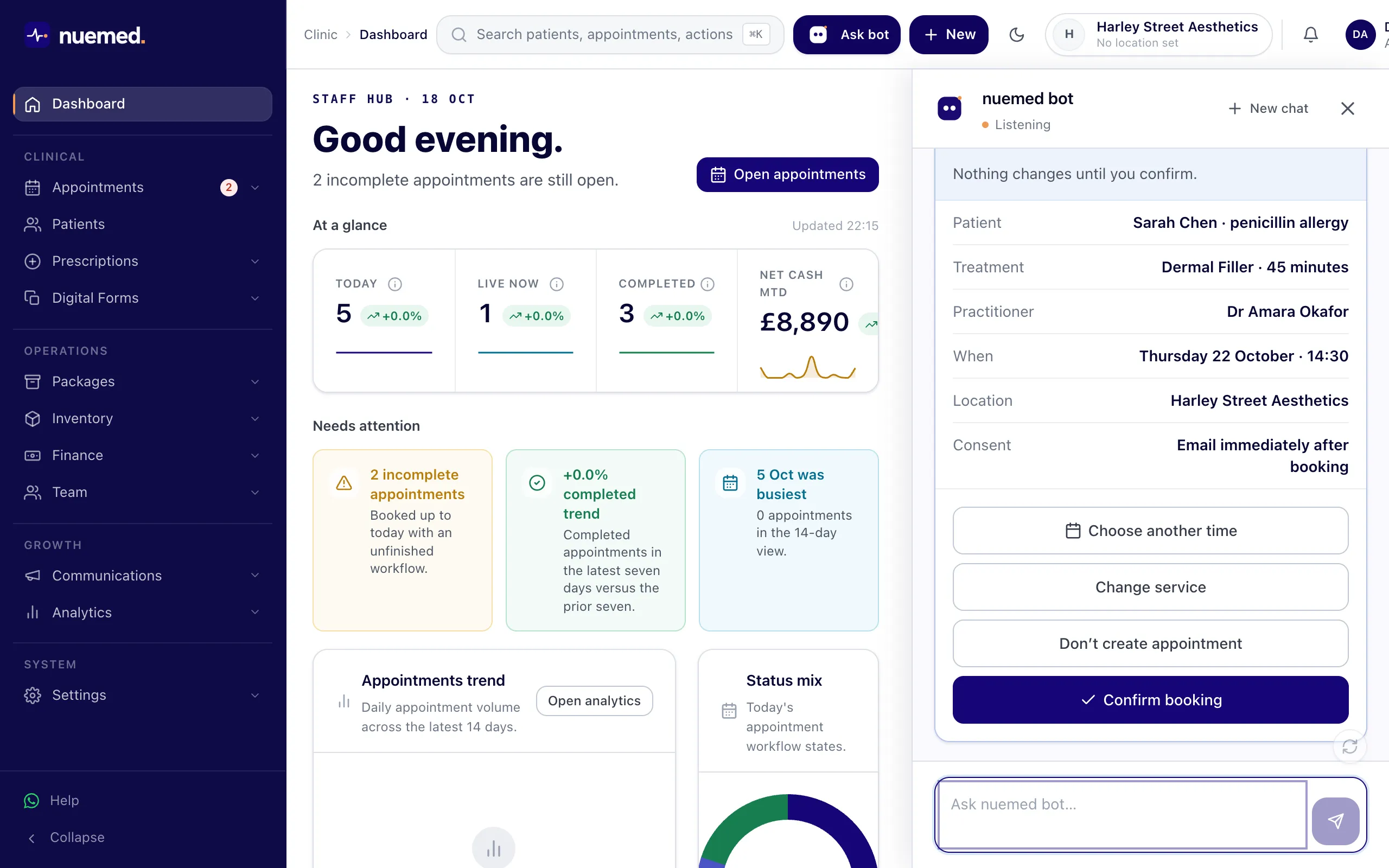
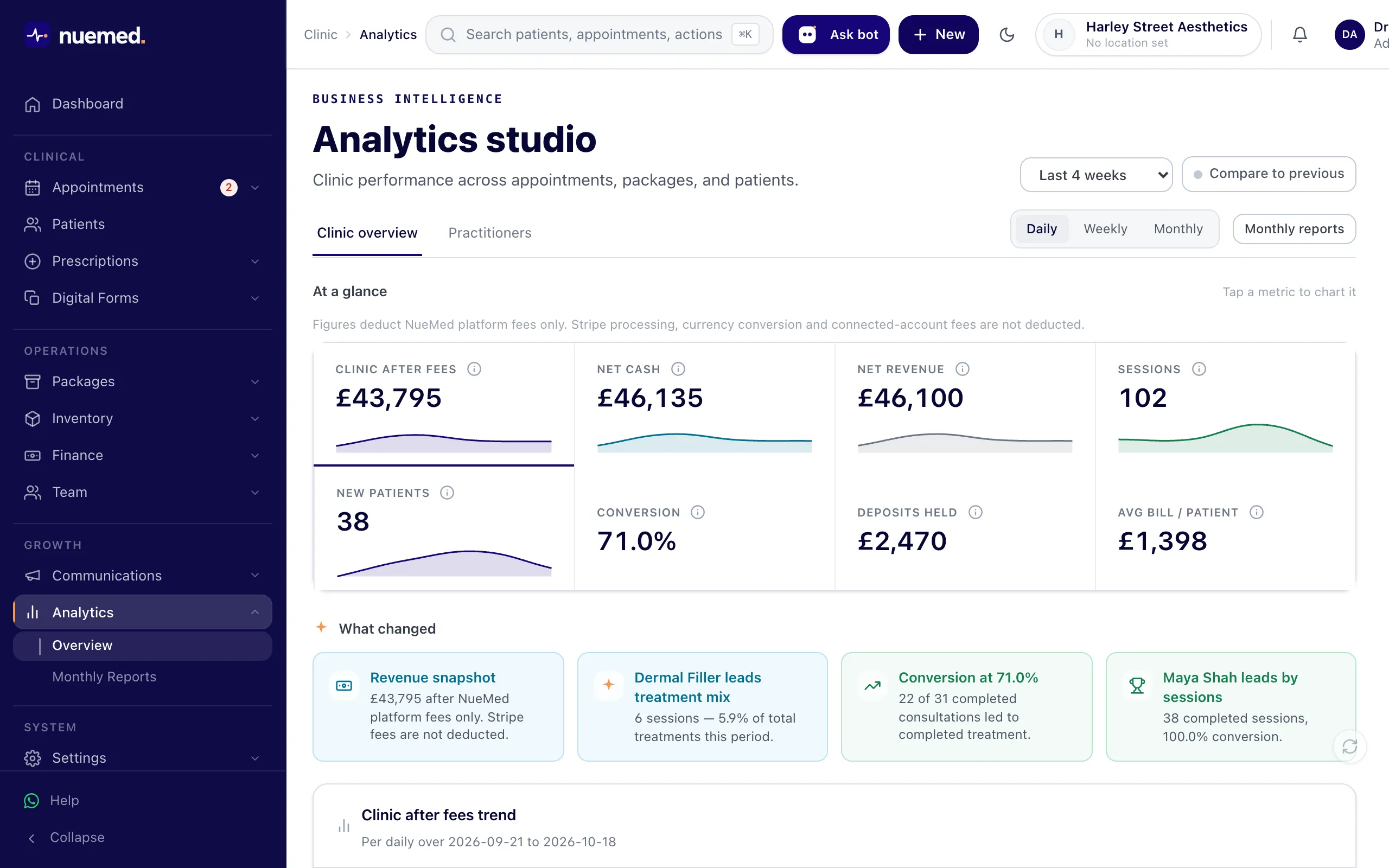
A clinic doing both cosmetic and medical-purpose work has a mixed VAT position — some supplies standard-rated, some exempt — and has to keep them straight all year, per treatment. Do it by hand and quarter-end becomes a reconstruction. This is exactly why clinic software should handle the split at the point of treatment. (nuemed’s finance & VAT tools let you toggle VAT treatment where it applies and keep the cosmetic-vs-medical split straight as you go.)
Practical checklist
- Treat cosmetic treatments as standard-rated by default.
- Only claim exemption where the principal purpose is medical and documented.
- Keep clinical documentation supporting any exemption.
- Track the split per treatment, not at year-end.
- Talk to a VAT specialist about your specific mix — this area is actively enforced.
FAQ
Is Botox VAT-exempt? Not when it’s cosmetic. It may be exempt when used for a recognised medical condition and properly documented.
Are dermal fillers VAT-exempt? Generally no — cosmetic fillers are standard-rated.
Does it count as exempt because a doctor did it? No. HMRC applies a principal-purpose test, not a who-performed-it test.
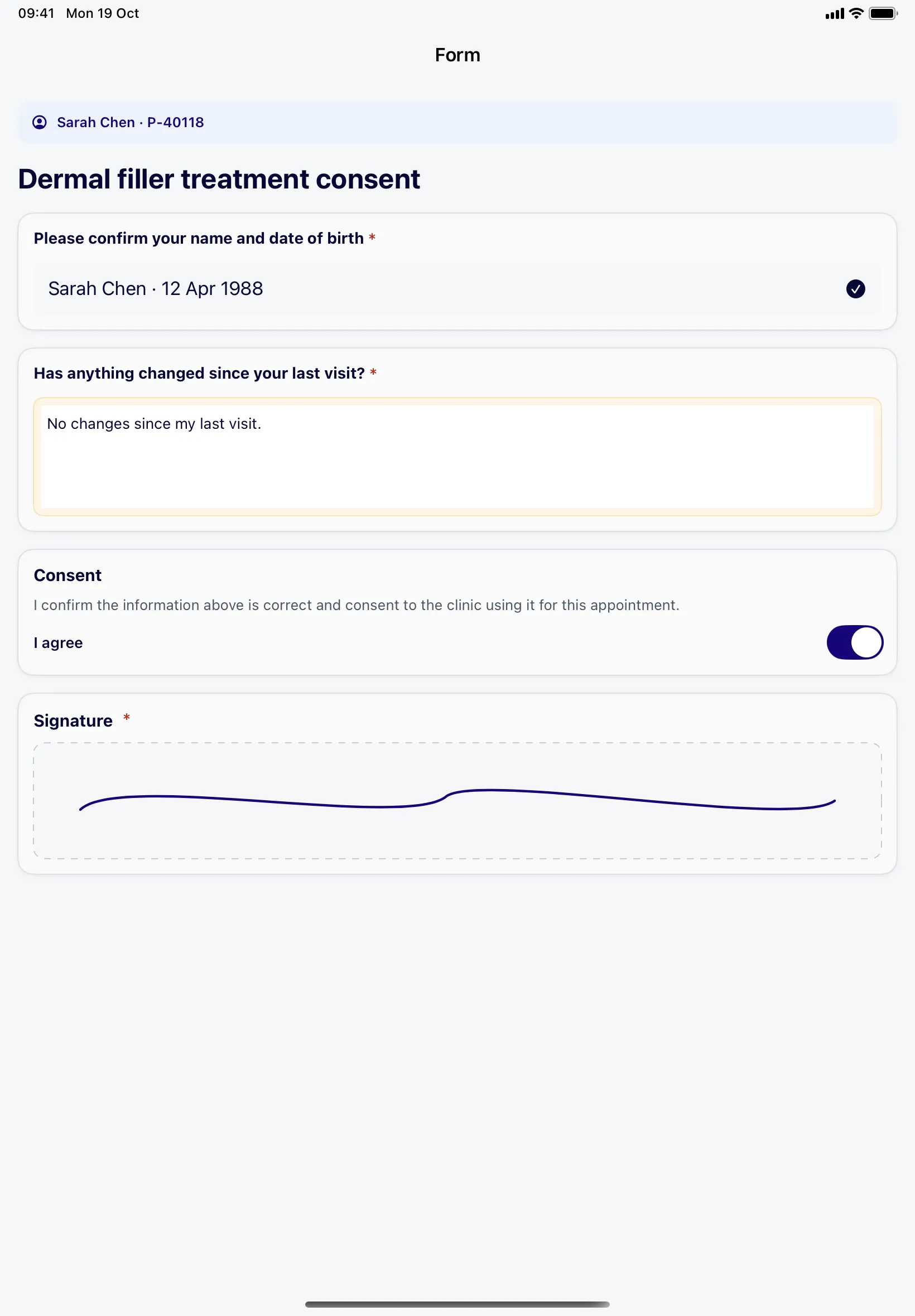
Keep the clinical rationale behind each VAT decision with the relevant electronic patient record. For the wider setup, read the guide to starting an aesthetic clinic, explore the connected aesthetic clinic software and review current Nuemed pricing.
This is general information, not tax advice. VAT on aesthetics is complex and actively scrutinised by HMRC — get advice from a qualified VAT specialist for your clinic.